


Aug 27, 2025

Preeti Nidhi
Modern grocery shopping can feel like navigating a maze. Rows of brightly packaged products boast phrases like “natural,” “low-fat,” “immune-boosting,” or “high-energy.” But what do these claims really mean? Often, very little. The truth lies not on the front of the package but on the back, in the fine print of the food label.
Learning to read and interpret food labels is one of the most empowering steps you can take for your health. By understanding what matters and what can be safely ignored, you can make more informed choices, reduce your intake of unnecessary additives, and choose foods that actually nourish you.
Why Food Labels Are Important
Food labels exist to help consumers understand what is in the product they are buying. They provide transparency about calories, nutrients, and ingredients so you can evaluate whether an item supports your health goals. When used correctly, labels can help you:
Compare two products side by side and choose the better option.
Identify hidden sugars, sodium, and unhealthy fats.
Avoid misleading marketing terms.
Understand how a product fits into your daily diet.
Unfortunately, labels can also overwhelming with numbers and terms that seem complicated at first glance. That is why knowing what to focus on—and what not to—is critical.
What to Look For on Food Labels
1. Serving Size and Servings Per Container
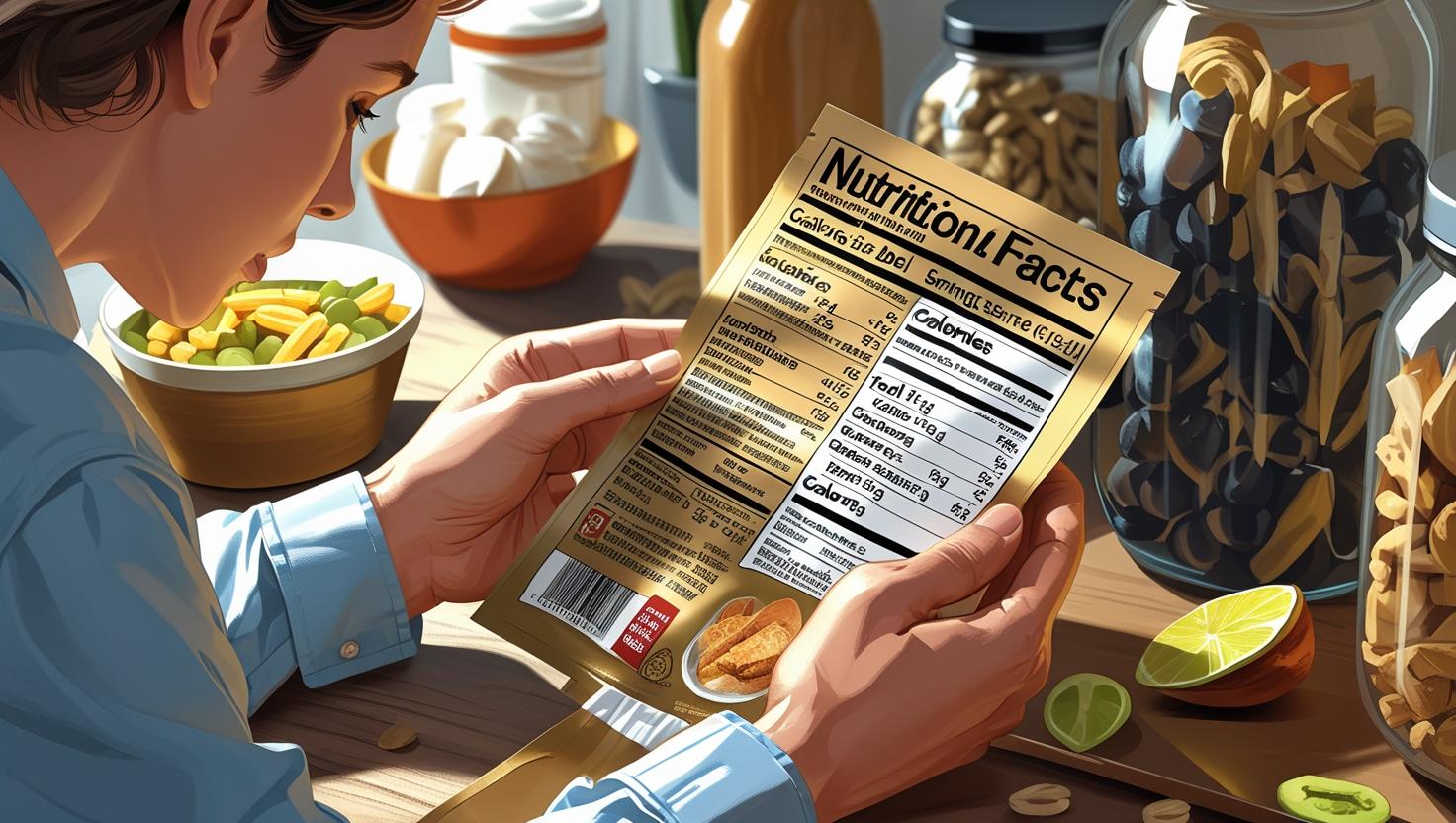
Every food label begins with serving size, and this is the foundation for interpreting the rest of the panel. All the calorie and nutrient values listed are based on this serving size.
For example, if the label lists 150 calories per serving but the container has three servings, finishing the whole package means you have actually consumed 450 calories—not 150. Many people overlook this detail, which can lead to underestimating calorie intake.
Tip: Compare foods based on serving size or per 100 grams when possible, so you are comparing like with like.
2. Calories in Context
Calories indicate the amount of energy in food. While they are important, they should not be the only focus. Consider where those calories are coming from. A 200-calorie portion of nuts contains healthy fats and protein, while a 200-calorie soda offers mostly sugar with no nutritional value.
Think of calories as a broad guide. Instead of obsessing over them, balance your daily calorie intake with nutrients that keep you satisfied and energized.
3. Macronutrients: Fats, Carbohydrates, and Protein
Fats: Not all fats are created equal. Unsaturated fats from olive oil, nuts, seeds, and avocados are beneficial for heart health. Saturated fats are acceptable in moderation, often found in dairy or meat. The real red flag is trans fats, often listed as “partially hydrogenated oils,” which can raise bad cholesterol and lower good cholesterol. Aim to keep trans fats out of your diet altogether.
Carbohydrates: Total carbohydrates include sugars, fiber, and starch. Look for foods rich in complex carbohydrates—whole grains, oats, quinoa—that release energy slowly and support steady blood sugar levels. Minimize refined carbs such as white flour and processed grains that cause quick spikes in blood sugar.
Protein: Protein is vital for muscle repair, energy, and satiety. Choose products with meaningful amounts of protein, especially for snacks and meals. For example, Greek yogurt often provides 10 grams or more per serving, compared to 2–3 grams in regular yogurt.
4. Added Sugars Versus Natural Sugars
This is one of the most important distinctions to make. Total sugar on the label includes both natural sugars (from fruit and dairy) and added sugars (such as corn syrup, cane sugar, or honey). Added sugars provide calories but no nutritional benefit and contribute to weight gain, diabetes, and other health concerns.
Health experts recommend limiting added sugars to less than 24 grams per day for women and 36 grams for men. Checking this section on the label can help you avoid products that sneak in excessive sugar, even in items marketed as healthy.
5. Fiber Content
Fiber is often overlooked, but it plays a crucial role in digestion, satiety, and blood sugar control. A product with at least 3 grams of fiber per serving is a good choice, especially if it is something like bread, cereal, or snacks. Whole grains, legumes, fruits, and vegetables are naturally high in fiber. A lack of fiber in packaged food often signals a highly processed product.
6. Sodium Levels
Sodium, or salt, is widely used in packaged foods as a flavor enhancer and preservative. However, excessive sodium intake is linked to high blood pressure and increased risk of heart disease. The American Heart Association recommends limiting sodium intake to 2,300 mg per day, with an ideal limit of 1,500 mg.
A helpful rule of thumb: foods with less than 140 mg of sodium per serving are considered low-sodium choices. When comparing soups, sauces, or snacks, check this number carefully—it can vary drastically between brands.
7. The Ingredient List
Beyond numbers, the ingredient list is where you see what truly makes up the product. Ingredients are listed in descending order by weight. The first few ingredients tell you the majority of what you are eating.
Choose foods with simple, recognizable ingredients like oats, almonds, or chickpeas. Avoid long lists filled with artificial colors, flavorings, or preservatives. While not every additive is harmful, heavily processed products usually offer fewer health benefits than those made with whole, natural ingredients.
What to Ignore on Food Labels
1. Marketing Buzzwords on the Front
Terms like “natural,” “wholesome,” or “immune-boosting” are often marketing tools rather than regulated standards. They can make a product sound healthier than it really is. Always turn the package around and check the facts on the back.
2. “Low-Fat” and “Sugar-Free” Claims
These claims can be misleading. A low-fat product may compensate with extra sugar or salt, while sugar-free foods may contain artificial sweeteners that add no nutritional value. Instead of focusing on what is removed, look at the overall nutritional profile.
3. Percent Daily Value (%DV)
The %DV column tells you how much a nutrient in one serving contributes to your daily diet based on a 2,000-calorie plan. While this can be helpful as a rough guide, it does not apply to everyone. Your age, activity level, and health goals may require more or less than the standard daily value. Treat it as a reference, not a rule.
4. Long Chemical-Sounding Additives
While not all additives are harmful, products with long lists of artificial names often indicate heavy processing. As a general rule, the simpler the ingredient list, the better. Save highly processed foods for occasional indulgences rather than daily consumption.
5. Fortification Claims
Labels that boast “fortified with vitamins and minerals” can be misleading. In many cases, these nutrients were added back after processing stripped the food of its natural value. While fortification can be beneficial in some cases, whole foods such as fruits, vegetables, and nuts provide nutrients in a more natural and balanced form.
A Quick Checklist for Smarter Shopping
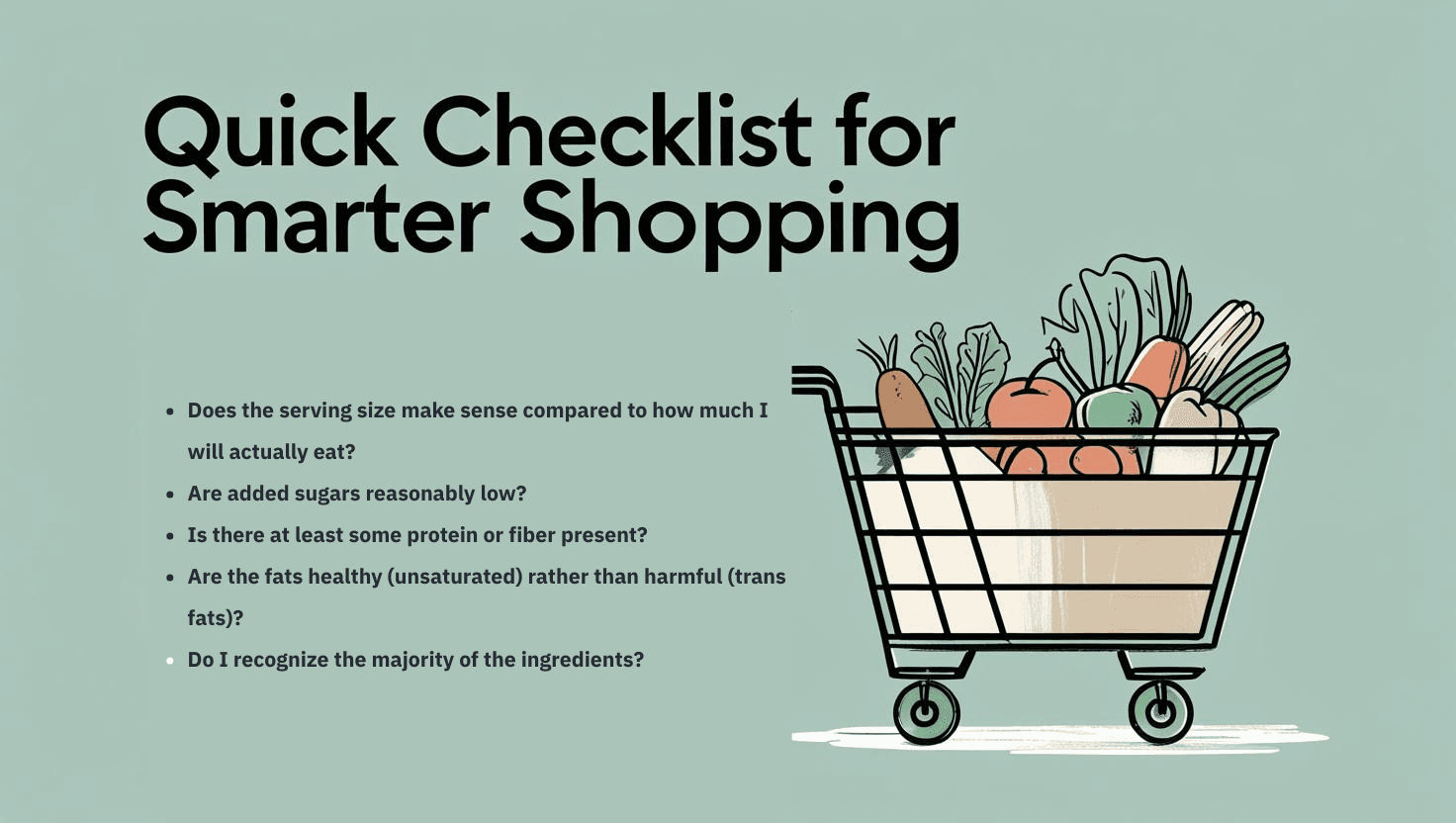
To simplify, when you pick up a product, ask yourself:
Does the serving size make sense compared to how much I will actually eat?
Are added sugars reasonably low?
Is there at least some protein or fiber present?
Are the fats healthy (unsaturated) rather than harmful (trans fats)?
Do I recognize the majority of the ingredients?
If you can answer “yes” to most of these, you are making a good choice.
Final Thoughts
Food labels do not have to be confusing or intimidating. Once you know where to focus—serving size, calories in context, sugar, fiber, protein, sodium, and ingredients—you can make confident decisions without being swayed by flashy marketing terms. Over time, scanning labels becomes second nature, and you will quickly spot products that fit your health goals versus those that are better left on the shelf.
Healthy eating is not about strict rules or fear of food—it is about awareness. Food labels are your guide to that awareness, helping you choose foods that truly support your body, rather than just looking healthy on the surface.