


Aug 14, 2025

Preeti Nidhi
In an age where speed is celebrated, slowing down can feel like a radical act. From the moment we wake up to the time we collapse into bed, life can feel like a race — deadlines at work, back-to-back notifications, quick meals grabbed on the go, and a constant pressure to do more, faster. While this drive for productivity can be rewarding in the short term, it often comes at a high cost to our physical, mental, and emotional well-being.
Slowing down doesn’t mean giving up on goals or becoming unproductive. In fact, it’s one of the most strategic investments you can make in your health. By intentionally creating space to breathe, reflect, and act mindfully, you can restore balance, protect your body from stress, and experience life more fully. This blog explores the science, benefits, and practical strategies behind embracing a slower, balanced approach to health.
The Science of Slowing Down
Our bodies are wired to adapt to different states depending on our circumstances. The nervous system operates in two main modes: the sympathetic (“fight-or-flight”) and the parasympathetic (“rest-and-digest”). The sympathetic system is vital in emergencies — it sharpens focus, increases heart rate, and mobilizes energy. But when this state is activated constantly due to everyday stress, it can become harmful.
Chronic activation of the stress response raises cortisol and adrenaline levels, which over time can: suppress the immune system, making you more vulnerable to illness; disrupt digestion, leading to issues like bloating, indigestion, or nutrient deficiencies; interfere with sleep, affecting mood and cognitive performance; and increase the risk of cardiovascular disease by maintaining high blood pressure and heart rate.
Slowing down shifts the body into parasympathetic dominance. In this state, heart rate and blood pressure normalize, digestion works efficiently, muscles relax, and the mind becomes calmer and more focused. This isn’t just about feeling better in the moment — it’s about preventing the long-term wear and tear that comes from constant overdrive.
Physical Health Benefits of Slowing Down
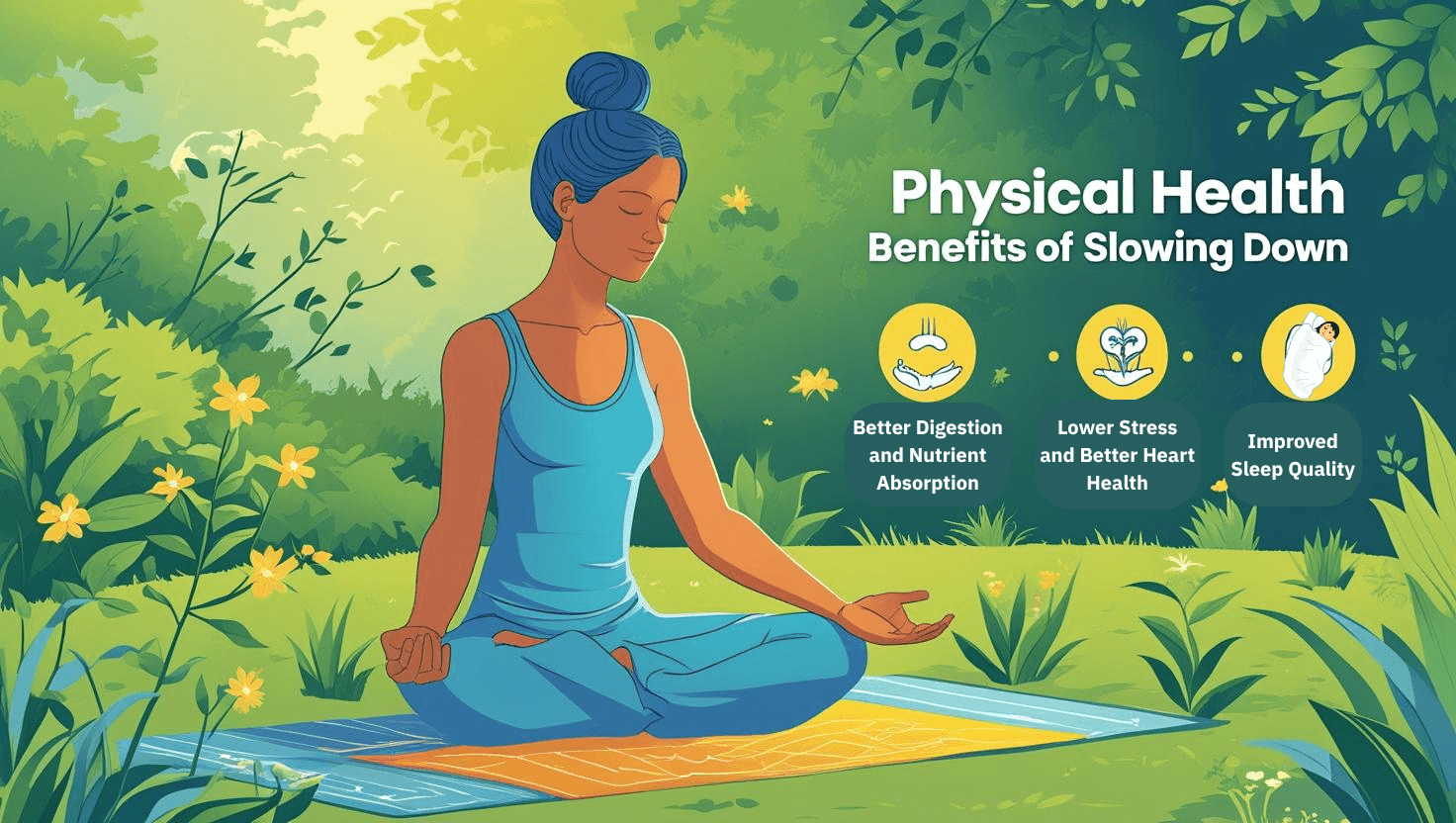
1. Better Digestion and Nutrient Absorption
Rushed eating is a modern epidemic. When you eat quickly — often in front of screens or on the go — you bypass the body’s natural satiety cues. This can lead to overeating, weight gain, and digestive discomfort. Studies show that people who eat slowly consume fewer calories and have better nutrient absorption because the digestive process starts properly in the mouth, where enzymes in saliva break down food. By slowing down during meals — chewing thoroughly, savoring flavors, and avoiding distractions — you not only enjoy your food more but also give your gut the chance to do its job efficiently.
2. Lower Stress and Better Heart Health
Chronic stress keeps the cardiovascular system under constant pressure. Taking moments throughout the day to pause — whether through deep breathing, short walks, or mindful breaks — helps lower blood pressure, improves circulation, and reduces inflammation in the body. Research consistently links stress reduction with lower risks of heart attack and stroke.
3. Improved Sleep Quality
A balanced pace during the day sets the stage for restorative sleep at night. When the body is overstimulated late into the evening — from caffeine, screen time, or mental overactivity — it disrupts melatonin production and delays the natural onset of sleep. Slowing down in the hours before bed, practicing gentle movement, or engaging in calming activities like reading can improve both the quality and quantity of your rest.
Mental and Emotional Well-being
Slowing down benefits more than just the body — it can completely transform mental health.
Sharper Focus and Better Decision-Making
When you’re always in a rush, your brain operates in reactive mode. This makes it harder to process information, evaluate options, and think creatively. Pausing before responding to challenges allows for more thoughtful decisions and reduces the risk of burnout.
Reduced Anxiety and Emotional Stability
Fast-paced living often triggers a sense of urgency about everything — even when there’s no real emergency. This constant state of alertness can fuel anxiety and irritability. Intentional slowing down, whether through meditation, mindful walking, or even simply breathing deeply, signals safety to the brain and promotes emotional balance.
Greater Joy and Presence
Life isn’t just about milestones — it’s about the moments in between. Slowing down helps you appreciate simple pleasures: the aroma of fresh coffee, the sound of rain, the warmth of sunlight on your skin. These small moments of presence build long-term life satisfaction and resilience against stress.
Slowing Down in Nutrition
One of the most tangible areas to apply a slower approach is in the way we choose and consume food. In a world dominated by fast food and convenience snacks, slowing down can radically improve your health.
Choose Whole Over Processed: Ultra-processed foods often provide a quick energy hit but lack the fiber, vitamins, and minerals your body needs. Slowing down your shopping and meal planning helps you choose real, nutrient-dense foods.
Cook at Home More Often: Preparing meals from scratch allows you to control ingredients, portion sizes, and cooking methods. It also engages the senses and encourages mindful eating.
Eat Seasonally and Locally: Slowing down enough to shop at farmers’ markets or local produce stores connects you to fresher, more nutrient-rich foods while supporting sustainable practices.
Practical Strategies to Slow Down
Slowing down isn’t about withdrawing from life; it’s about engaging with it more deliberately. Here are some actionable ways to build a balanced pace:
1. Mindful Mornings – Instead of reaching for your phone the moment you wake up, take a few minutes to stretch, breathe, or simply sit in silence. This sets a calm tone for the rest of the day.
2. Scheduled Pauses – Block short breaks into your calendar every 90 minutes. Use these moments to hydrate, take a brief walk, or step outside for fresh air.
3. Tech Boundaries – Set “no-screen” zones — particularly during meals and the hour before bed. This reduces mental stimulation and helps you be more present.
4. Gentle, Intentional Movement – Incorporate slower forms of exercise such as yoga, tai chi, or leisurely walking. These activities not only improve mobility and flexibility but also reduce stress and promote mindfulness.
5. Say No More Often – Not every invitation or task is essential. Slowing down means protecting your time and energy by prioritizing commitments that truly matter.
6. Breathing Practices – Simple breathing exercises, such as the 4-7-8 method or diaphragmatic breathing, can instantly calm the nervous system and refocus your mind.
Overcoming the Guilt of Slowing Down
One of the biggest barriers to slowing down is guilt — the fear that by doing less, we’re being lazy or unproductive. This is a cultural narrative, not a biological truth. Our bodies are designed for cycles of activity and rest. Just as athletes schedule recovery days to prevent injury and improve performance, we all need rest to sustain our long-term output. Reframing rest as a tool for productivity can help.
When you take time to recharge, you return to your work and relationships with more energy, creativity, and focus. Think of slowing down as sharpening your axe before chopping more wood — it’s preparation, not procrastination.
Conclusion
Slowing down is not about opting out of life; it’s about fully living it. By embracing a balanced pace, you give your body the chance to heal, your mind the space to think clearly, and your emotions the room to stabilize. The power of slowing down lies in its simplicity. You don’t need elaborate plans or expensive tools — you just need to make intentional choices: to eat without rushing, to breathe before reacting, to prioritize rest as much as action. Over time, these small acts accumulate into a life that feels healthier, more present, and deeply fulfilling. In a world that glorifies hustle, slowing down is an act of courage — and perhaps the most important step toward lasting health.